When your pup suddenly refuses dinner, vomits on the carpet, or leaves a less-than-lovely surprise in the yard, it is normal to wonder what to give a dog with an upset stomach. For a mild, short-lived problem, simple food, water, rest, and close observation may help. However, repeated vomiting, severe diarrhea, pain, weakness, or blood can point to something more serious than an ordinary tummy ache.
Before changing your dog’s diet, look at the whole dog, not only the mess. A dog who had one loose stool but still wants to play is in a very different situation from a dog who is hunched over, shaking, refusing water, or vomiting repeatedly.
What Can You Give Your Dog?
- Offer fresh water in small, frequent amounts.
- When your dog can keep water down, offer a small portion of bland, easily digestible food.
- Plain boiled white-meat chicken and cooked white rice are common temporary options.
- Plain canned pumpkin may help some dogs experiencing loose stool.
- Avoid fatty foods, seasoning, butter, oil, bones, rich treats, and table scraps.
- Do not give human stomach medicine unless your veterinarian approves it.
- Contact a veterinarian for repeated vomiting, blood, severe discomfort, weakness, dehydration, or symptoms that are not improving.
First, Decide Whether Home Care Is Appropriate
A mild dog stomach upset may happen after a sudden food change, too many treats, eating grass, finding something questionable in the yard, or simply having a sensitive digestive system.
Home care may be reasonable when your dog:
- Has only mild diarrhea or one episode of vomiting
- Remains alert and responsive
- Is still interested in water
- Is not showing obvious pain
- Has no blood in the stool or vomit
- Has not swallowed a toy, bone, chemical, medication, or toxic food
Puppies, senior dogs, very small dogs, and dogs with chronic medical conditions can become dehydrated or seriously ill faster. Call your veterinary clinic earlier for these pets instead of relying on a homemade diet.
Read Your Dog’s Poop Clues
We spend a lot of time around dog poop at Scoopology, and we can tell you that a pet’s stool can reveal useful changes.
One slightly soft stool is not the same as repeated, watery diarrhea. Pay attention to:
- Frequency
- Color
- Consistency
- Mucus
- Blood
- Visible foreign material
- Straining
- Unusual odor
Take a photo or save a fresh sample in a sealed container when calling your veterinary clinic. It may not be the most glamorous item you carry out the door, but it can help your veterinarian understand what is happening.
What to Give a Dog With an Upset Stomach
For a mild gastrointestinal upset, the goal is not to create a complicated home remedy. It is to provide gentle nutrition without introducing more fat, seasoning, or unfamiliar ingredients.
Plain Boiled Chicken and White Rice
Plain boiled white-meat chicken and white rice are commonly used as a temporary bland diet. Remove the skin, bones, and visible fat from the chicken, and cook both ingredients without salt, oil, butter, sauce, garlic, onion, or seasoning.
White rice is generally preferred over brown rice during a temporary stomach issue because it is softer and easier to digest. Start with a small portion rather than giving a normal full bowl. If the food stays down, you can continue offering small meals more frequently during the day.
This food is not nutritionally complete for long-term feeding. It is a temporary option while you watch for improvement or follow instructions from your veterinarian. Current veterinary guidance also emphasizes that recovering intestines still need appropriate nutrition, so automatically withholding all food for long periods is not suitable for every pet.
Plain Canned Pumpkin
Plain canned pumpkin can provide soluble fiber, which may help regulate stool consistency in some dogs. Check the label carefully. The can should contain plain pumpkin, not pumpkin pie filling with sugar, spices, or other added ingredients.
Pumpkin is not a cure for every dog upset. Too much fiber may make gas or diarrhea worse, and persistent symptoms still require veterinary attention. Ask your vet how much is appropriate for your dog’s size and health history.
A Veterinary Gastrointestinal Diet
A veterinarian may recommend a complete gastrointestinal diet specifically formulated for digestive problems. This can be a better choice than homemade chicken and rice when symptoms last more than a brief period, when your dog has a food sensitivity, or when balanced nutrition is especially important.
Some prescription or veterinary diets use highly digestible ingredients, adjusted fat levels, added fiber, probiotics, or hydrolyzed proteins. The correct diet depends on why the stomach issues are happening.
Fresh Water
Hydration matters, particularly when vomiting or diarrhea causes fluid loss. Keep clean water available, but do not encourage a nauseated dog to gulp a full bowl at once. Small, frequent opportunities to drink may be easier on the stomach.
Call your veterinarian when your dog cannot keep water down, refuses to drink, has dry or sticky gums, appears weak, or urinates less than usual. These may be signs of dehydration.
A Simple Feeding Plan for a Mild Upset Stomach
Once your dog is no longer actively vomiting and can keep water down, use a cautious feeding approach.
Step 1: Start Small
Offer a small amount of bland food. Do not immediately fill the bowl because your dog suddenly seems hungry. Eating too much too quickly can trigger another round of vomiting or diarrhea.
Step 2: Feed Smaller Meals
Instead of one or two large meals, divide the temporary diet into several smaller meals. Watch what happens after each feeding.
Keep a simple note on your phone that records:
- What your dog ate
- When your dog ate
- Water intake
- Vomiting episodes
- Bowel movements
- Energy level
- Any possible item your dog may have swallowed
This record can be extremely useful if your dog needs professional care.
Step 3: Look for Steady Improvement
Signs of improvement may include better energy, interest in food, less frequent diarrhea, firmer stool, and no additional vomiting.
A temporary diet should produce gradual progress. It should not be used to repeatedly cover up a problem that returns every few days.
Step 4: Return to the Regular Diet Gradually
Once your dog is feeling better and stool quality is returning to normal, slowly mix the regular food back into the bland diet over several meals or days. An abrupt switch can create another stomach upset.
For example, begin with mostly bland food and a small amount of regular food. Gradually increase the regular diet while reducing the temporary food. Your veterinarian may recommend a slower transition based on the cause and severity of the illness.
What Should Dogs Not Eat During a Stomach Upset?
A plain diet can quickly become not-so-plain when people add ingredients to make it more appealing. During dog care for digestive trouble, simple is usually safer.
Avoid giving:
- Fried, greasy, or high-fat foods
- Chicken skin or fatty meat
- Butter, oil, gravy, or broth containing onion or garlic
- Cheese, milk, or rich dairy products
- Spicy or heavily seasoned food
- Bones or rawhide
- Rich treats
- Leftovers
- Raw meat or raw eggs
- Pumpkin pie filling
- Sugar-free foods that may contain xylitol
Do not assume that every food humans use for nausea or diarrhea is safe for a pet stomach. Dogs eat and metabolize certain ingredients differently from people.
Do Not Reach for Human Medication
Never give pain relievers, anti-diarrheal products, antacids, nausea medicine, or other human medication without veterinary approval.
Some products can be toxic to dogs. Others may be unsafe for certain breeds, interact with existing medication, or mask symptoms of poisoning, pancreatitis, an obstruction, or another serious condition. A medication that was previously recommended for one dog should not automatically be given to another.
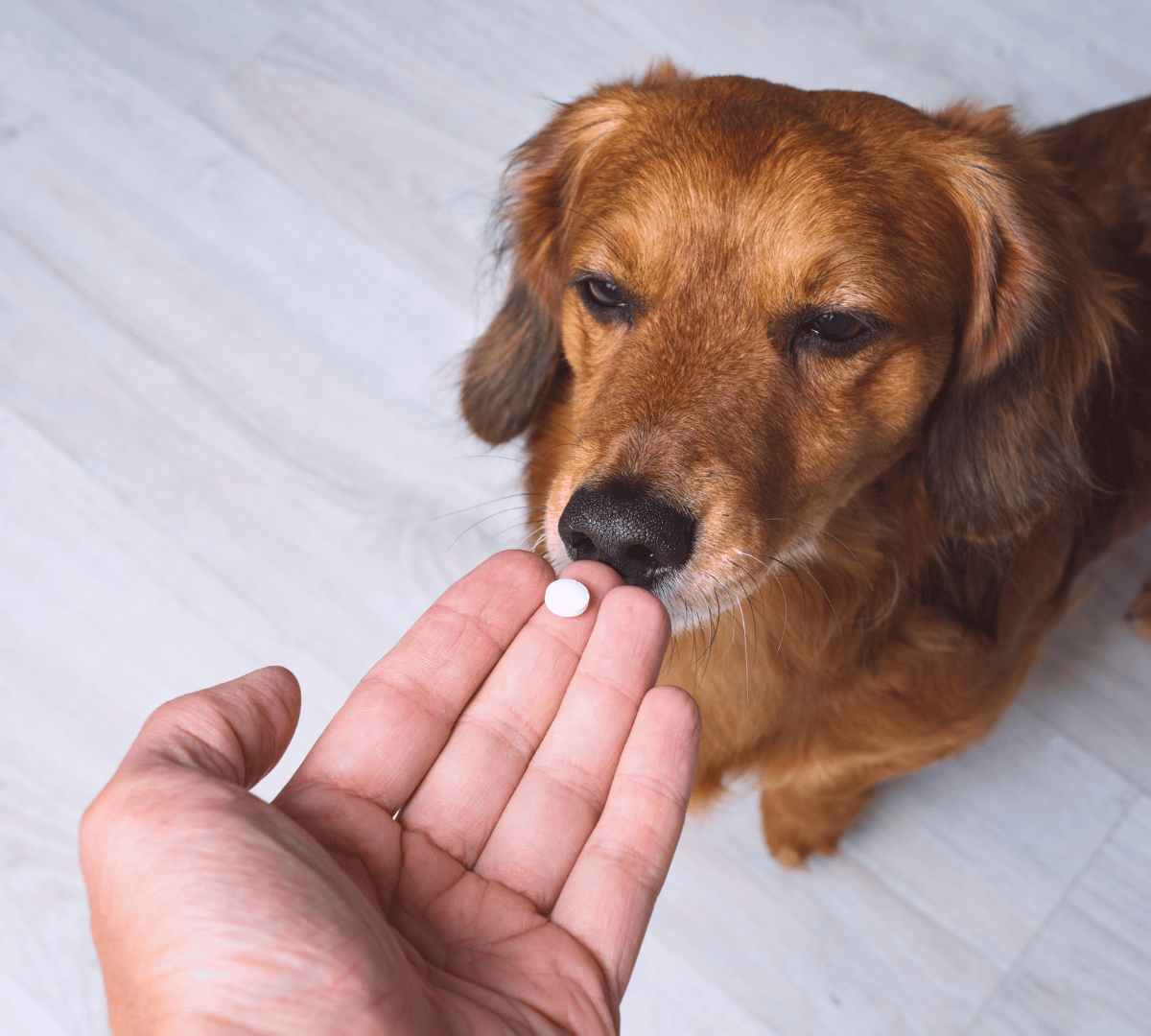
When Is an Upset Stomach an Emergency?
Contact a veterinarian promptly if your dog has repeated vomiting, severe or persistent diarrhea, blood, abdominal pain, weakness, or difficulty keeping water down.
Seek urgent veterinary care for:
- A swollen, tight, or painful abdomen
- Repeated attempts to vomit with little or nothing coming out
- Blood in vomit or stool
- Black, tar-like stool
- Collapse, extreme weakness, or confusion
- Pale gums
- Shaking, crying, or a hunched posture
- Suspected toxin exposure
- A swallowed toy, sock, bone, corn cob, or other object
- Frequent vomiting or vomiting after drinking
- Signs of dehydration
- Rapidly worsening symptoms
Abdominal pain and persistent vomiting can occur with an intestinal blockage, while a swollen abdomen and unsuccessful retching may be signs of bloat. Both require immediate attention.
When Mild Symptoms Keep Returning
Recurring stomach upset deserves investigation, even when each episode appears manageable. Possible causes can include parasites, food intolerance, dietary changes, pancreatitis, inflammatory digestive disease, stress, infection, or scavenging behavior.
Bring your food log, stool photos, packaging from anything your dog may have eaten, and a list of medications or supplements to the appointment. The pattern is often as important as the most recent incident.
Preventing the Next Dog Stomach Problem
Not every digestive problem can be prevented, but a few habits can lower the risk:
- Change dog food gradually rather than overnight.
- Keep garbage, compost, medications, and chemicals secured.
- Avoid giving large amounts of unfamiliar treats.
- Supervise dogs around toys, bones, and chewable objects.
- Keep parasite prevention and veterinary checkups current.
- Pick up pet waste regularly so you can notice changes quickly.
- Prevent dogs from investigating old waste, spoiled food, and questionable yard discoveries.
A clean yard does more than look better. It makes fresh changes easier to notice and reduces opportunities for dogs to sniff, step in, or investigate waste that should have already been removed.
Scoopology Gives a Crap About Your Pets and Your Yard
Scoopology Poop Removal helps busy pet parents enjoy cleaner, healthier outdoor spaces without doing the doody work themselves. Our dependable pet waste removal services make it easier to monitor new stool changes instead of sorting through days of accumulated waste.
Contact Scoopology Poop Removal at (360) 612-7667 or through our website. We serve communities across Western Washington, including Tacoma, Puyallup, Olympia, Vancouver, Ridgefield, Kent, Seattle, and surrounding areas. Contact us today to request your personalized pet waste removal quote.
Frequently Asked Questions
What can I give my dog for an upset stomach and vomiting?
Once vomiting has stopped and your dog can keep water down, a veterinarian may recommend small portions of plain, easily digestible food such as boiled chicken and white rice.
Repeated vomiting, weakness, pain, blood, or an inability to keep water down requires veterinary care. Do not give human anti-nausea or stomach medicine without professional instructions.
Is scrambled egg good for a dog with an upset stomach?
Plain, fully cooked egg may be tolerated by some dogs, but it is not the best option for every digestive problem.
Egg can be too rich for certain dogs, particularly those with fat-sensitive conditions. Do not add butter, oil, milk, cheese, salt, or seasoning. Ask your veterinarian before using egg as a bland-diet protein.
How long should a dog stay on a bland diet?
A homemade bland diet should generally be used only for a short period unless a veterinarian provides a longer plan.
Chicken and rice alone are not nutritionally complete. When symptoms improve, gradually transition back to regular food. Contact your vet if your dog is not improving, symptoms return, or the diet is needed for more than a brief recovery period.
Can I give my dog canned pumpkin for diarrhea?
Plain canned pumpkin may help some dogs with mild diarrhea because it contains fiber. Use only 100 percent pumpkin, not sweetened or spiced pie filling.
The appropriate amount varies by the dog’s size and medical history. Too much may worsen digestive symptoms, so ask your veterinarian for individual feeding guidance.
Should I withhold food when my dog vomits?
Do not automatically fast every dog. Advice depends on the dog’s age, size, health, symptoms, and the reason for vomiting.
Current veterinary guidance recognizes that the gastrointestinal system still needs nutrition during recovery. Call your veterinarian for instructions, especially for puppies, seniors, small dogs, diabetic dogs, or pets with existing medical conditions.
How can I tell whether my dog is getting better?
Improvement usually means no additional vomiting, better energy, normal water intake, renewed interest in food, and stool that gradually becomes more formed.
Do not judge recovery from one bowel movement alone. Continue monitoring your dog’s behavior, appetite, hydration, and bathroom habits.
Your dog handles the eating, playing, and tail-wagging. Let Scoopology Poop Removal handle what gets left behind. Contact us today and take one messy job off your weekly list.