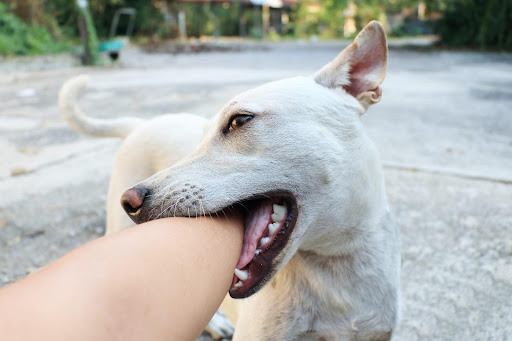
A playful nip can quickly stop being cute when sharp teeth catch your hand, clothing, or ankle. Learning how to get dog to stop biting starts with understanding why the behavior happens. A teething puppy needs a different response than an adult pet reacting from fear, pain, frustration, or overstimulation.
The goal is not to frighten your furry friend into keeping their mouth closed. It is to teach safer choices, prevent repeated practice, and recognize when the behavior requires professional care.
What Should You Do When Biting Starts?
- Stop moving and end attention as soon as teeth touch skin or clothing.
- Stay calm. Do not hit, yell, grab the muzzle, or hold the mouth shut.
- Redirect their attention to an appropriate toy before play continues.
- Reward calm behavior and gentle interaction immediately.
- Give plenty of rest, enrichment, bathroom breaks, and suitable chewing options.
- Track what happens before each incident so you can identify triggers.
- Contact a veterinarian or qualified behavior professional for sudden, forceful, fearful, or unpredictable bites.
Why Is Your Dog Using Their Mouth?
Mouthing can look similar from the outside, but the reason behind it matters. Before trying to stop the behavior, look at what happened immediately beforehand.
Normal Puppy Exploration
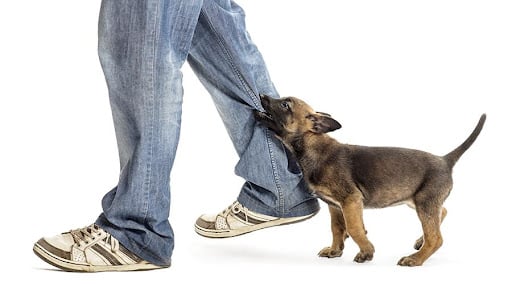
Young puppies explore with their mouths. They may grab sleeves, chase feet, chew fingers, or become extra mouthy during active play. This common puppy behavior is usually accompanied by loose movement, bouncing, play bows, and an otherwise relaxed expression.
Teething can increase the urge to chew. Offering safe rubber toys, food-stuffed toys, or puppy-safe chilled chews gives sore gums a more appropriate target.
Normal does not mean it should be ignored. A biting puppy still needs patient boundaries before the habit becomes harder to change.
Overexcitement and Poor Impulse Control
Some pets become mouthy when visitors arrive, children run through the yard, a leash comes out, or a game becomes too intense. Their excitement rises faster than their ability to control themselves.
You may notice:
- Jumping and grabbing clothing
- Chasing moving feet
- Ignoring familiar cues
- Barking or spinning
- Taking treats too roughly
- Becoming wilder as play continues
In this situation, the answer is usually less stimulation, not louder correction.
Fear, Frustration, Guarding, or Pain
A serious dog bite may happen because the animal feels trapped, threatened, uncomfortable, or protective of food, toys, resting areas, or another person. However, while mouthing and nipping are typical behaviors, they can become problematic if not managed properly.
Warning signs can include a stiff body, freezing, hard staring, lip lifting, repeated growling, guarding, hiding, or trying to escape. Sudden behavioral changes may also be connected to dental pain, an injury, arthritis, illness, or sensitivity when touched.
Do not treat these situations like ordinary puppy mouthing. Create distance and arrange professional help.
How to Get Dog to Stop Biting During Play
The clearest lesson is simple: gentle behavior keeps the fun going, while teeth on skin make the fun stop.
End the Interaction Calmly
When teeth touch you, become still. Remove attention for approximately 10 to 30 seconds by turning away or stepping behind a gate.
Avoid pulling your hands back quickly. Fast movement can make your fingers look like an even more exciting target. Avoid shouting too. Some pets interpret loud reactions as part of the game.
A brief pause works because it connects the unwanted action with a predictable outcome. The fun disappears.
For some puppies, a short “ouch” interrupts the moment. For others, a high-pitched sound creates more excitement. Watch the response rather than repeating a technique that clearly makes things worse.
Redirect Before Restarting Play
Once your pet has settled, offer an appropriate toy. Use a longer tug toy, ball, rubber chew, or food puzzle that keeps teeth away from hands.
Restart interaction only when the animal is calmer. If rough mouthing returns, end the session again.
Timing matters. Do not wave a toy around while teeth are still grabbing you, because the dog may earn the toy by biting. Pause first, wait for a moment of calm, and then present the alternative.
Teach Bite Inhibition
Bite inhibition means learning to control the pressure of the mouth. Puppies begin developing this skill while interacting with their mother and littermates. When play becomes too rough, the other animal stops participating.
People can continue that lesson by consistently ending interaction after painful contact and rewarding a soft mouth. This does not mean allowing repeated nipping forever. It means teaching control while gradually moving toward no teeth on people.
Reward the Behavior You Want
Many households spend all their energy reacting to mistakes and forget to reward success.
Notice when your pet:
- Chooses a toy instead of a hand
- Sits before receiving attention
- Greets someone with four paws down
- Releases an object when asked
- Calms down after excitement
- Plays without using teeth
Reward immediately with praise, food, or continued interaction. Good behavior needs to work better than unwanted behavior.
Use a Simple Three-Step Response
Consistency becomes easier when everyone follows the same plan.
| What happens | Your response | What the dog learns |
|---|---|---|
| Teeth touch skin or clothing | Freeze and remove attention | Biting ends interaction |
| The dog becomes calm | Offer a toy or request a simple cue | Calm choices reopen access |
| Gentle play continues | Praise and reward | Appropriate play keeps the fun going |
Family members should use the same sequence. Mixed reactions can make progress slower. One person should not encourage wrestling with hands while another expects perfect self-control.
Adjust the Daily Routine
A mouthy pet is not always under-exercised. Sometimes the animal is overtired, overstimulated, or missing predictable opportunities to rest and decompress.
Give Plenty of Appropriate Activity
Use a balanced routine that may include:
- Sniff-focused walks
- Short reward-based training sessions
- Fetch or “find it”
- Food puzzles
- Safe chewing
- Calm exploration
- Structured rest
Avoid assuming that more intense exercise always solves the problem. An exhausted puppy can behave like an overtired child and become even more difficult to settle.
Build Breaks Into Play
Keep active sessions brief enough to end before control disappears. A puppy that becomes wild after 15 minutes may do better with several five-minute sessions spread throughout the day.
Watch for the point when listening declines and grabbing increases. End before the full “land shark” mode arrives.
A bathroom break can also help. Restlessness, circling, sudden zooming, and mouthiness sometimes appear when a young pet needs to go outside.
Manage the Environment
Dog training works faster when the animal cannot rehearse the same mistake all day.
Use baby gates, leashes indoors when supervised, playpens, and secure resting areas to prevent access to running children, loose clothing, or chaotic greetings. Keep suitable toys nearby in the rooms where incidents usually happen.
Management is not failure. It protects people while new habits are being built.
What Should You Avoid?
Several common reactions can increase fear or excitement.
Do not:
- Hit or slap the animal
- Grab the muzzle
- Hold the mouth closed
- Pin the animal down
- Use the crate as angry punishment
- Chase the animal after an incident
- Encourage hand wrestling
- Force interaction when the animal wants space
- Let children handle the issue alone
Physical corrections may stop movement briefly, but they do not teach a safe replacement behavior. They can also cause defensive responses or damage trust.
You should also avoid outdated “dominance” advice. Your pet does not need to be physically overpowered. They need clear rules, safe management, repetition, and reinforcement.
When Does Biting Require Professional Help?
Seek help promptly when the behavior is forceful, unpredictable, escalating, or associated with fear or aggression.
Contact a veterinarian or qualified professional when:
- A bite breaks or punctures skin
- The animal freezes, growls, guards, or lunges
- Bites target the face
- Children, seniors, or vulnerable adults are at risk
- The behavior appears suddenly
- Touching a certain area triggers a reaction
- The animal cannot be safely interrupted
- Previous methods have increased the problem
- The behavior continues into adulthood with significant intensity
A veterinarian should first rule out pain or illness when behavior changes suddenly. A credentialed, reward-based trainer may help with routine mouthing and impulse control. Fear, guarding, or aggression may require a veterinary behaviorist or experienced behavior consultant.
Until help is available, prevent access to known triggers. Use gates, separate rooms, leashes, and secure barriers. Do not test whether the animal will bite again.
A Cleaner Yard Can Support Better Play
Training is easier when the environment is safe, comfortable, and ready for positive activity. A yard covered in pet waste gives families less usable space for supervised games, sniffing, and calm outdoor routines.
Keeping waste picked up also helps prevent curious puppies from investigating or eating things they should leave alone. Less time doing the dirty work means more time for consistent training, appropriate play, and those all-important ear scratches.
About Scoopology Poop Removal
Scoopology Poop Removal is a local, family-owned company that gives a crap about your pets, your family, and your yard. Our professional team provides reliable pet waste removal throughout Clark, Lewis, Kitsap, Grays Harbor, Thurston, Mason, Pierce, and King counties.
Call Scoopology Poop Removal at (360) 612-7667 or request service online. Contact us today to reclaim your outdoor space and enjoy a cleaner place to train, relax, and play.
Frequently Asked Questions
How long does it take to stop puppy biting?
Many families notice improvement within a few weeks of consistent practice, but full progress often takes longer. Age, teething, temperament, household consistency, sleep, and opportunities to rehearse the behavior all affect the timeline.
Do not expect one correction to solve the issue. Focus on steady reduction in frequency, pressure, and intensity.
Should I yelp when my puppy bites?
A brief yelp works for some puppies, but it makes others more excited. If the sound increases jumping or mouthing, stay quiet, remove attention, and return only after calm behavior.
The animal’s response determines whether the technique is useful.
How do I stop mouthing when guests arrive?
Use a leash, gate, or separate area before opening the door. Give the pet a prepared activity, such as a food toy, and reward calm behavior at a safe distance.
Do not wait until the animal is already jumping and grabbing clothing to begin management.
Why does my puppy bite more at night?
Evening mouthiness often increases because the puppy is tired, overstimulated, or has accumulated energy and frustration throughout the day.
Try a bathroom trip, brief sniffing activity, safe chew, and quiet rest instead of starting another high-energy game.
Can I let my puppy bite my hands gently?
Allowing hands to become toys can make expectations unclear. Use actual toys for mouth-based play and reward calm physical contact.
Teaching bite inhibition is valuable, but the long-term household rule should still be that human skin and clothing are not chew toys.
What should I do immediately after a serious dog bite?
Separate the animal safely without grabbing near the mouth. Give the injured person appropriate medical attention, prevent another interaction, and contact a veterinarian and qualified behavior professional.
Do not recreate the situation to see whether the bite happens again.
Enjoy Your Yard Without the DOODY Work
Your pet’s behavior may require patience, but cleaning the yard does not have to take another minute of your week. Call Scoopology Poop Removal at (360) 612-7667 or contact us online to schedule dependable pet waste removal and get back to enjoying a cleaner, more usable yard.