If you are asking, “can i report my neighbor for not picking up dog poop,” the answer is usually yes. However, where you report it depends on whether the mess is being left on your property, a public sidewalk, shared apartment grounds, an HOA-managed area, or the dog owner’s own yard.
Before filing a formal complaint, it helps to understand your options. A calm conversation may solve an occasional problem. Repeated incidents, animal waste on private property, or a growing sanitation concern may require documentation and a report to the appropriate local agency.
What You Should Know
- You can report repeated dog waste problems in many communities.
- Start by recording dates, times, locations, and what happened.
- Speak to the dog owner calmly when it feels safe and appropriate.
- Contact a property manager or HOA for problems in shared communities.
- Animal control, code enforcement, public works, or a city reporting service may handle public-area complaints.
- Avoid touching, returning, or throwing the waste onto someone else’s property.
- Local rules vary, so check the ordinance and reporting process for your city or county.
 Can You Report Someone for Leaving Dog Waste?
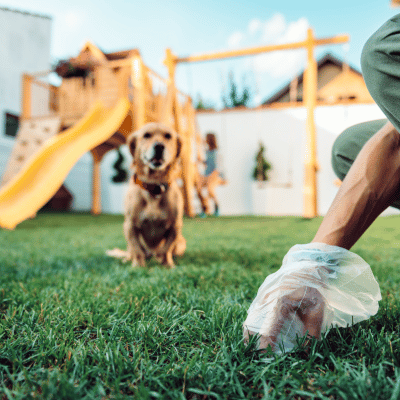
Yes. You can report a person who repeatedly leaves waste in a public area, shared space, or on property that does not belong to them. The agency that handles the waste complaint will depend on your location and the circumstances.
In Washington, domestic animal waste cannot be managed in a way that creates a nuisance or health hazard. Cities, counties, apartment communities, and homeowners’ associations may also have more specific cleanup rules.
A report is more likely to receive attention when you can identify:
- The exact location
- The date and approximate time
- Whether the problem is recurring
- A description of the dog and handler
- Photos or security footage, when legally obtained
- Whether the waste is on public, shared, or private property
One unidentified pile may be difficult to investigate. A documented pattern involving the same person, dog, and location gives the responding organization more useful information.
Who Should Receive the Complaint?
Start with the authority responsible for the property.
| Where the problem occurs | Who may handle it |
|---|---|
| Apartment or rental property | Landlord or property manager |
| HOA community or condominium | HOA board or community management |
| Public sidewalk, park, or trail | City services, parks department, public works, or code enforcement |
| Unincorporated county area | County animal control or code enforcement |
| Your own yard or driveway | Animal control, code enforcement, or the property owner’s landlord |
| Neighbor’s yard with severe buildup | Local code enforcement, public health, or animal control |
Some animal control departments accept formal complaint forms rather than informal phone reports. For example, Regional Animal Services of King County asks residents to verify that the agency serves their area before submitting its animal complaint form.
Your city may also offer a general reporting app or online service request system. Seattle’s Find It, Fix It app, for example, accepts selected reports involving problems in public spaces. The available categories can change, so confirm that the issue is covered before submitting it.
What Should You Do Before Filing a Complaint?
Reporting may be appropriate, but it does not always need to be the first step. The goal is to stop the behavior without creating a larger conflict.
Confirm Which Dog Is Responsible
Make sure you have correctly identified the animal and handler. A dog may pass the same area shortly before another person notices the mess. Wildlife, stray animals, and other neighborhood dogs can also make identification difficult.
Do not accuse a specific person based only on an assumption. Observe the pattern and document what you personally see.
Speak to Your Neighbor When It Feels Safe
A polite conversation can solve a problem faster than a formal complaint. The owner may have forgotten a bag, failed to notice what the dog was doing, or incorrectly assumed the area was not someone’s property.
Keep the conversation simple:
“Hi, I have noticed waste being left beside my lawn after your dog walks past. Could you please make sure it gets picked up? We use that area regularly.”
Avoid insults, threats, or arguments about whether the issue is “a big deal.” Focus on the behavior and what needs to change.
You do not have to speak directly to someone who has previously behaved aggressively or made you feel unsafe. In that situation, document the incidents and contact the appropriate authority.
Keep an Incident Log
For a recurring problem, keep a record for one or two weeks or until you have established a clear pattern. Write down:
- Date and time
- Location
- Description of the dog
- Description of the handler
- What you observed
- Whether the person was approached
- Whether the waste was removed later
A short, factual log is more useful than a long, emotional statement. It shows that the report involves repeated conduct rather than a one-time disagreement between neighbors.
Use Cameras Carefully
A doorbell camera or security camera may help document a neighbor dog repeatedly entering your yard. Aim cameras at your own property and follow applicable privacy and recording laws.
Do not follow someone, film through windows, or post their image publicly to shame them. Evidence should be used to support a legitimate complaint, not to encourage online harassment.
What If the Dog Waste Is on Your Property?
You have a stronger reason to act when someone knowingly allows an animal to leave waste on your private property and walks away.
Start with a polite request or a small sign near the affected area. If the behavior continues, save the dates and any available footage. You can then report the conduct through animal control, local code enforcement, the dog owner’s landlord, or your HOA.
Practical deterrents may include:
- A low decorative border beside the lawn
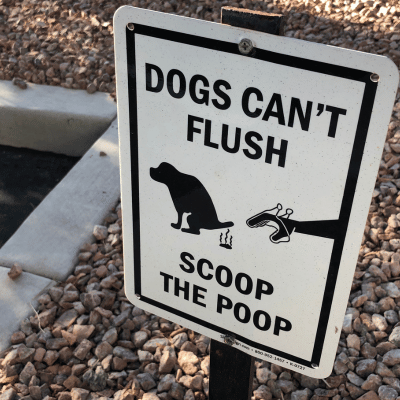
- A visible “Please Pick Up After Your Pet” sign
- Motion-activated lighting
- A properly positioned security camera
- A bag dispenser near a frequently used community route
Avoid placing anything that could injure an animal or person. Chemical deterrents, sharp objects, traps, or retaliatory dumping can create a more serious legal and safety problem than the original mess.
What If the Waste Is Accumulating in the Neighbor’s Yard?
A messy yard is different from a dog regularly leaving waste on your property. You generally cannot dictate how another property owner maintains a yard simply because you dislike its appearance.
However, a large accumulation may become a legitimate concern when it creates persistent odor, attracts pests, drains onto nearby land, or presents a possible health nuisance. Washington’s domestic animal waste rule specifically addresses animal-keeping conditions that create a nuisance or health hazard.
In that situation, contact local code enforcement, public health, or animal control and describe the observable conditions. Avoid diagnosing a health violation yourself. The agency can decide whether an inspection or other response is appropriate.
Where tenants are involved, the property manager may also need to know that the yard is not being maintained according to the lease.
Why Uncollected Waste Is More Than an Annoyance
It is easy to treat this as nothing more than a bad-neighbor problem, but uncollected animal waste can affect the wider neighborhood.
Rain can move bacteria and nutrients from lawns, sidewalks, trails, and parks into storm drains and waterways. Washington’s Department of Ecology advises pet owners to bag the waste, place it in the garbage, and keep it out of storm and sewer systems. The department also recommends cleaning residential yards every few days, particularly where children play.
There is also the everyday impact. People may step in it. Children may play nearby. Other dogs may investigate or consume it. Repeated buildup can create odor and make a shared lawn, walkway, or recreation area unpleasant to use.
Dog waste is not just an eyesore; it’s a health hazard. It contains harmful bacteria and parasites that can infect humans and other animals. Diseases such as E. coli, Salmonella, and Giardia can spread through contact with contaminated soil or water.
The issue is not that dogs create waste. That is unavoidable. The problem is when the person responsible for the animal chooses not to remove it.
What Not to Do During a Neighbor Dispute
Frustration can lead people to make the situation worse. Even when the original complaint is valid, retaliation can shift attention away from the owner’s conduct and toward your response.
Do not:
- Throw the waste onto the neighbor’s porch or yard
- Leave threatening notes
- Follow or confront the person repeatedly
- Post identifying photos in neighborhood groups
- Trespass to return the waste
- Make claims you cannot support
- Use substances intended to scare or harm the dog
Keep your communication factual. Ask for the behavior to stop, document what happens, and let the proper organization handle continued violations.
Can a Pet Waste Removal Service Solve the Problem?
A waste removal service cannot issue warnings or enforce local animal law. It also cannot enter another person’s property without permission. What it can do is restore and maintain an affected yard after waste has accumulated.
Professional waste removal can be useful when:
- Several dogs use the same residential yard
- A rental property needs a one-time cleanup
- A homeowner has mobility or scheduling limitations
- A property manager needs recurring service for approved areas
- Old piles are difficult to locate in long grass
- Regular cleanup has become difficult to maintain
Cleanup does not excuse the person creating the problem. It simply gives the property owner a practical way to make the lawn usable again while the complaint is addressed.
About Scoopology Poop Removal
Scoopology Poop Removal helps homeowners, dog owners, rental properties, and approved community spaces stay cleaner with one-time, weekly, twice-weekly, and every-other-week service options. We give a crap about you, your pets, and your yard, and we are happy to handle the doody work when cleanup becomes too much.
Contact Scoopology Poop Removal at (360) 612-7667 or [email protected]. We serve Clark, Lewis, Kitsap, Grays Harbor, Thurston, Mason, Pierce, and King counties. Contact us today to request an instant quote.
Frequently Asked Questions
Can I file a complaint without knowing the dog owner’s name?
Yes, although the agency may need enough information to identify the person or establish a recurring pattern.
Provide the location, typical time, description of the dog, description of the handler, and any lawfully obtained photos or footage. A vague report about an unidentified animal may be difficult to enforce.
Should I call the police about someone not picking up after a dog?
Usually, no. A routine cleanup dispute is generally better directed to animal control, code enforcement, a property manager, an HOA, or a city service request system.
Contact emergency services only when there is an immediate threat to a person or animal. Do not use emergency resources for an ordinary sanitation complaint.
Can my landlord fine a tenant for leaving animal waste?
Possibly. The answer depends on the lease, pet agreement, property rules, and local law.
A property manager may issue a warning, cleaning charge, or lease violation when the applicable agreement allows it. Tenants should request and review the written pet waste policy.
Can an HOA enforce dog cleanup rules?
Yes, when the association’s governing documents contain enforceable pet or sanitation rules.
An HOA may send a courtesy notice, document repeated violations, or impose authorized penalties. Some managed communities also use registered pet DNA programs to identify the source of uncollected waste.
Is it legal to record a neighbor who leaves waste in my yard?
A security camera directed toward your own property is often useful, but recording and privacy laws vary.
Position the camera responsibly and avoid recording places where someone would reasonably expect privacy. When uncertain, review local requirements before using audio recording or publicly sharing footage.
What should I do with waste left on my lawn?
Use a bag, scoop, or disposable gloves, seal the waste, place it in the garbage, and wash your hands afterward.
Do not hose it into a storm drain or leave it to break down in the grass. If the problem keeps happening, begin documenting each incident before cleaning it up. A clean yard should not become another source of stress. Contact Scoopology Poop Removal today at (360) 612-7667 and let our team do the doody work for you.